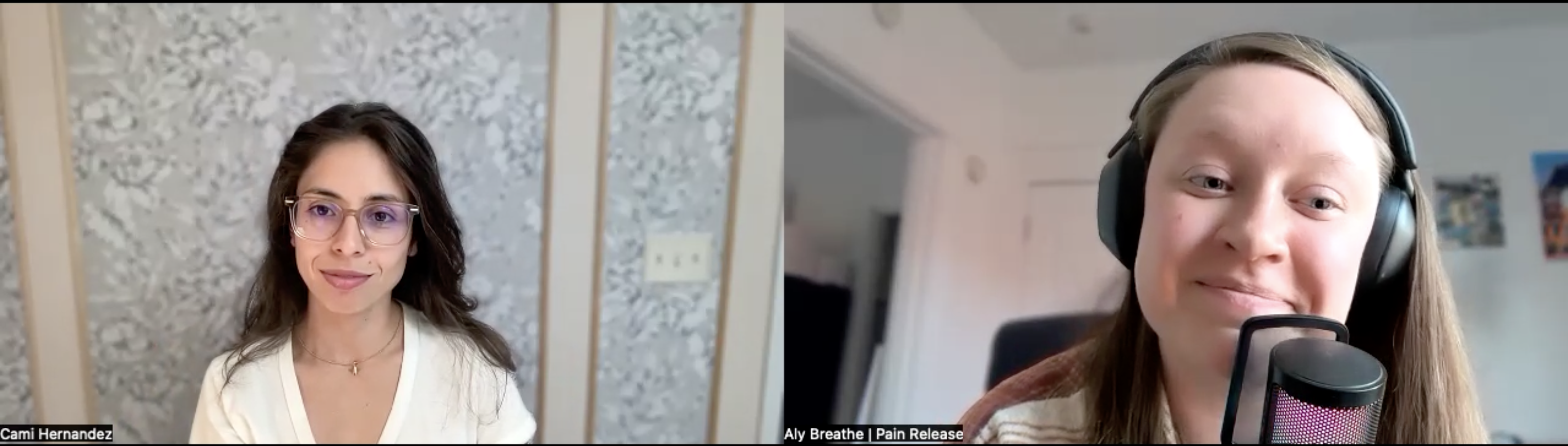
Seven good days after physio, then the familiar ache returns and another appointment goes in the diary. "Why Am I Still in Pain?" introduces a simple three-step practice for meeting that sensation differently, exploring what may be keeping you stuck, and reclaiming more attention for the life and people you love.
"It's been 17 years that I've had this pain, and this is the first time anything has worked."
"I could finally pick my wife up again. I felt more present and less defensive."
"It's possible, and we deserve it."
The receipt is still folded in a coat pocket. The car sits in the parking garage, and turning the key would mean going back to the rest of the day.
That moment shows up again and again in the messages I receive. Physio, then a chiropractor. Massage, dry needling, a cortisone injection, another specialist ordering another scan of the same spot from a slightly different angle. Each one starts with hope, and some of them help for a while.
Then it comes back. The messages sound like this:
"My back has been killing me for years and nothing works."
"I've tried everything. Physio, chiro, injections, massage. I get a week of relief, then it's back."
"I don't know if this is just my life now."
Two words appear in almost all of them. Still. And nothing works.
Many of the people who write to me have spent years trying to live a normal life while managing pain. From the outside, they look capable, even happy. They go to work, take care of their families, make plans, and show up for others. But behind the scenes, so much of their energy goes into managing a body that hurts. By the end of the day, there's barely anything left for themselves.
If this sounds familiar, you're not alone, and you're not broken.
Effort was never what was missing, and neither was willpower or finding the one practitioner who finally gets it right. Every treatment that faded taught the nervous system something new: expect this to return. Repeat that enough times and "my back hurts" turns into "something is wrong with me." I call this the Pain Identity Loop, and the book is about getting out of it.
The belief goes like this. Somewhere there is a specialist, a scan or a protocol that will locate the problem and correct it.
That belief is reasonable. Injuries, structural issues and medical conditions are real, and they need proper care. Temporary relief is real relief too. I will never ask anyone to give up their medical treatment, and the book says so on its first pages.
The trouble is what the cycle teaches. Treatment, relief, return. Treatment, relief, return. The nervous system doesn't review the evidence like a doctor would. It notices a pattern and gets ready for it to happen again.
So the next twinge arrives with years of history attached. The muscles tighten before the movement starts, and attention narrows to one spot. A quiet calculation begins about tomorrow. The pain may be no stronger than it was before the first appointment, but the certainty about what it means has grown a lot.
None of those treatments that didn't hold proved the body was broken. They proved the question was too small.
After the physical treatments, a second wave often follows. John Sarno. Nicole Sachs. The Way Out. The Curable app. Long evenings reading about stress, trauma and the nervous system.
Plenty of the people I work with understand pain better than some practitioners do. And still the breath shortens before lifting the shopping bag. The shoulders rise at the first familiar twinge.
For years I coached mostly through the mind. Clients could name the belief and trace where it came from. Then one of them told me, "I understand, but I don't feel the difference."
That sentence changed how I work. Understanding gives you language, but the body needs an experience. Picture standing beside a swimming pool holding every book ever written about water. You can explain exactly how a body floats, and you are still standing beside the pool.
From age 10 to 16 I could barely speak in public. I had a severe stutter, and I remember standing on the balcony of my room, watching people walk past on the street below, sure 'I had one more problem than every one of them'.
The stutter was real. The story I told about it went deeper. It was never "I have a stutter." It was "I am broken."
I have not lived with chronic pain, and I won't pretend a stutter is the same as years of migraines or fatigue. What I know from the inside is how it feels to make a physical struggle mean something about who you are. That belief can get louder than the symptom.
I learned the difference between knowing and feeling the hard way. I spent years repeating affirmations about loving myself while something underneath knew I didn't believe a word of them. Then someone guided me through a somatic practice. Warmth came first, then a calm that filled my whole body. My mind had been trying to believe that for years, and my body simply felt it.
Later a founder came on my podcast to talk about her business. She mentioned neck pain almost in passing. We explored it, and 28 minutes later she said, "What the hell did you do? Oh my God, it feels so much better."
That was when I saw that the biggest thing holding someone back in their business sometimes has nothing to do with the business. And the line that runs through this whole book came out of it: a cycle of failed treatments is evidence of an incomplete question, not of a defective body.
When the body feels a sensation shift, or meets a familiar twinge without bracing, it collects evidence the old belief can't explain.
An argument doesn't do that. You can debate "my body is broken" with yourself for a decade. One moment of less tension makes the old certainty a little less certain, and the next moment adds to it.
I call this the Embodied Shift. Nobody is asked to believe harder or to feel positive. You notice what is there, explore what it has come to mean, and check what happens physically before and after.
This work sits alongside medical care. A 2022 BMJ review of 97 trials found that adding psychological care to physiotherapy for long-term low back pain did better than physiotherapy on its own. Physical care and this layer don't have to compete.
SEA is the three-step practice the book teaches. It pairs nervous system regulation with honest checks on what you actually feel, then turns what you notice into one thing to practise in daily life. You can start with every doubt still in place.
“It does work, because the pain went away.”
“More impactful than any therapy or coaching session I've experienced before.”
“Meaningful and lasting transformation.”
“My pain dropped from 7 to 1, and I finally stopped overthinking my business.”
Camila first came to me as a podcast guest. Five months after that first conversation she came back, and this time the health challenges filled the whole room. She was sleeping around 4 hours a night and spending much of the day in bed. She was 32, and she needed family to help her cook. The business she dreamed of was on hold.
We began a 12-month partnership. The work moved past symptoms into how she related to herself: the warrior who had to prove she was strong, and who didn't know how to put the sword down.
By month seven she was growing the business she had once paused. She had landed a client whose payments covered her expenses and was preparing to move to another state. Pain no longer ran her days, and she was dancing again. Her coaching sat alongside her medical care throughout. Everyone's experience is different.

“If you get the chance to work with Aly, take it.”
“I'm still in awe that my body doesn't hurt right now. Like, it was hurting sitting down. Hence why I was standing before.”
“I've been allowing myself to fix less, notice what I'm fixing, stop it, and just... feel the discomfort.”

Aly Breathe is a chronic pain and nervous system coach who helps people explore the emotional, identity, and nervous system patterns that may contribute to persistent pain. Her work is especially relevant to those who have tried multiple treatments and sense there may be another layer worth exploring.
She spent her teenage years living with a severe stutter and the belief that she was broken. Today she is 95% stutter-free. At 22 she was the youngest of more than 200 people in her coaching certification, wondering who would ever listen to her.
Since then she has coached more than 300 people, over 40 of them specifically around chronic pain and physical symptoms. She runs marathons, hosts a podcast, and still hears the six-year-old who promised her father an Olympic medal.
Her question for every client is the same one that runs through this book: What could your life look like if you no longer had to spend so much of it fighting your body?